Cottages For Sale on Drag Lake
A large, deep glacial lake just east of Haliburton village, at the top of the Drag River.
 6 photos$375,000Land0 bathLot 5 Gonnsen TrailDudley, Dysart et alCourtesy of: RE/MAX Professionals North
 6 photos$349,000Land0 bathLot 4 Gonnsen TrailDudley, Dysart et alCourtesy of: RE/MAX Professionals North
 50 photos$649,900Waterfront cottage3 bed · 1 bath · 700-1100 sq ft1021 Colonization TrailDysart, Dysart et alCourtesy of: RE/MAX Professionals North Baumgartner Realty
 42 photos$3,900,000Waterfront cottage5 bed · 8 bath · 5000 + sq ft1282 Carroll RoadDudley, Dysart et alCourtesy of: RE/MAX Professionals North Baumgartner Realty
 46 photos$644,999Waterfront cottage2+1 bed · 1 bath · 700-1100 sq ft3701 Gelert RoadSnowdon, Minden HillsCourtesy of: RE/MAX Professionals North
Listing data © PropTx MLS®. Information deemed reliable but not guaranteed.
Drag Lake cottage market today
Based on 5 homes for sale right now (asking prices). Updated through the day.
Homes by price
By style
| Style | For sale | Median price |
|---|---|---|
| Waterfront cottage | 5 | $645K |
| Cottage | 3 | $650K |
| Land | 2 | $362K |
Thinking of selling here?
See what your home could sell for against these 5 listings.
Get my instant estimateBrowse Drag Lake cottages by type and price
Drag Lake: the complete cottage buyer's guide
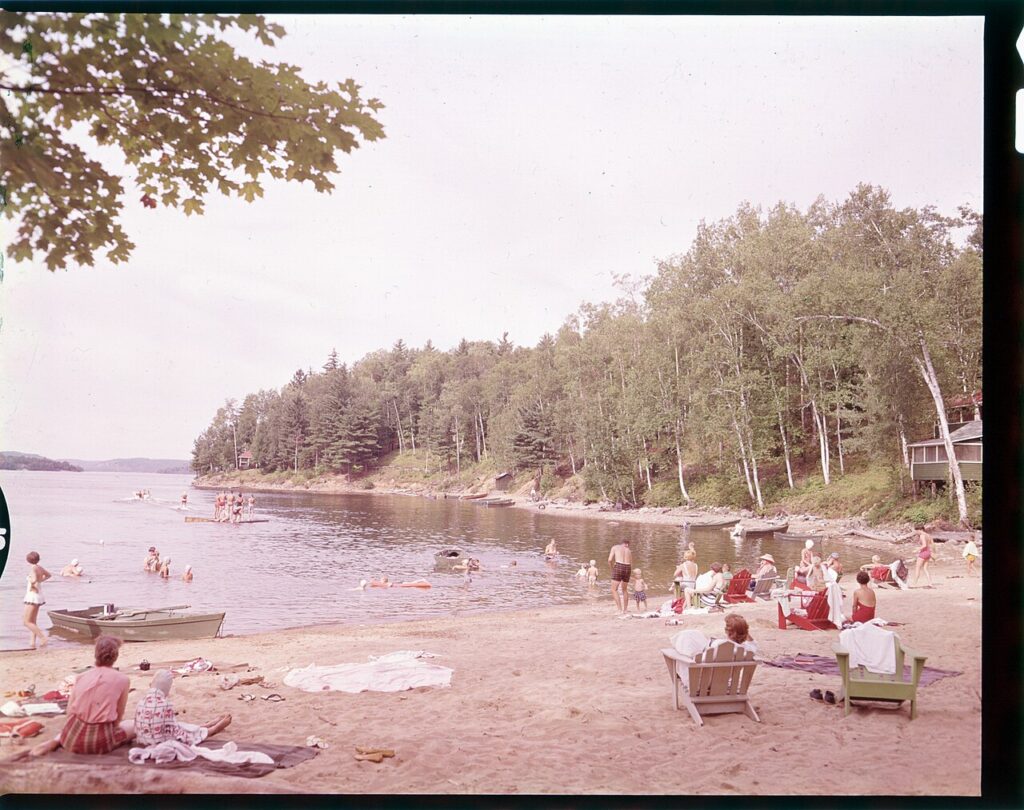
Owning a cottage on Drag Lake
Drag Lake has been a working reservoir for more than a century, and that history shapes everything from the dock to the drive. Since 1906 it has stored water for the Trent-Severn Waterway, and Parks Canada staff still set the level with wooden stop logs at the dams on Outlet Bay. Together with Spruce Lake and Outlet Bay, it forms the headwaters of the Burnt River system, and its outflow, the Drag River, runs west into Head Lake and the Kashagawigamog chain.
It is a deep lake, about 55 m at its deepest, which keeps a cold-water layer for lake trout under the summer swimming water. Cottaging started early, around 1880 in Outlet Bay, and over the years the lake hosted seven children's camps and several lodges. Some lots still have no road and are reached only by boat, a reminder that Drag was cottage country well before the roads caught up.
For a buyer, the appeal is a big, deep lake east of Haliburton village with two public sand beaches. The trade-off is a predictable summer drop of a metre or more, which matters a lot in the shallower bays. Ask any long-time owner about the old sandspit at Sand Point, which people once walked across before the dam raised the water, and you get a sense of how much the level shapes this lake.
- Deep water
- Lake trout and bass
- Close to Haliburton village
History of Drag Lake
Early exploration maps recorded Indigenous names along the lines of Kasquashibook and Kashquashibioh, translated as where the lakes meet. In the early 1800s it was Porcupine Lake, and maps used Drag Lake by the late 1850s. The name likely comes from dragging canoes and boats over a shallow stretch, or from hauling logs, though the name appears about a decade before logging began. Before the dam raised the water, people could walk a sandspit across the lake from Sand Point, and some did as late as the 1930s.
The Canadian Land and Emigration Company bought the whole lake in 1865. Mossom Boyd logged it first in 1869 and 1870, and the last log drive ran in 1926. The first wooden dam stood by 1868, the lake became a legal reservoir in 1906, and the present concrete dam was built between 1920 and 1925, with a generating station added in 1928. Drag Lake Lodge operated from 1925 to 1977, and Haliburton Lodge opened in 1927. Cottagers first organized in 1936 to complain about low water stranding water-access lots, and today's Drag and Spruce Lake Property Owners' Association took its current name in 2006.
Living with a reservoir lake
The lake fills each spring from snowmelt and rain, is drawn down through summer to keep the Trent-Severn canal navigable, and is set to a winter level in fall that leaves room to catch the spring flood. The dams can drop the lake by up to 1.74 m, though usually only about half of that is used. On average it starts full in May and sits about 1.1 m lower by October. The extremes on record run from 2.5 ft above full in May 1914 to 7 ft below full in March 1945.
A privately owned hydro station at the dam uses the released water when Parks Canada's flow needs allow. The lake holds roughly 20 billion litres of usable storage, which is why its level matters to people far downstream.
Big lake trout and a long fishing history
Lake trout live in the deep, cold water, with smallmouth bass, rock bass, pumpkinseed and white sucker along the shore. The municipality also lists cisco and brown trout. Drag was stocked from 1922 to 1984 and closed to winter fishing from 1987 to 2001 to let the trout recover. It once produced giants: lake trout of 38 lb 8 oz in 1978 and 38 lb 4 oz in 1980 are part of local lore.
Beaches and launches at Sand Point and Sandy Cove
Drag has two public beaches, Sand Point at 1043 Edmonton Trail and Sandy Cove at 1201 Dardanelles Road. The Sandy Cove site also has a cement and sand boat launch, excellent parking and a privy. A second cement launch at 2111 Fred Jones Road has good parking and a reputation as one of the better launch sites in the area. Expect these spots to be busy on summer weekends.
Spruce Lake, Outlet Bay and the water-access lots
Spruce Lake and Outlet Bay are tied to Drag's water levels and share its property owners' association. Outlet Bay was where cottaging began around 1880, and the first hydro hookups on the lake came in 1946 near Drag Lake Lodge and the bay. Some cottages on Drag are still water access only, and low water has affected those owners for nearly a century. If you are looking at a boat-in lot, the landing and parking on the mainland matter as much as the cottage.
Drag Lake sold prices by year
81 cottages, homes and lots on Drag Lake have sold through the MLS® since 2013, 7 of them in the past 12 months. Sold prices are for members. Joining is free.
Free members see sold prices, sale-to-asking ratios and every sold listing on the lake.
| Year | Sales | Median sold | Average | Lowest | Highest | Sold vs. asking | Median days |
|---|---|---|---|---|---|---|---|
| 2026 to date | 6 | ||||||
| 2025 | 10 | ||||||
| 2024 | 11 | ||||||
| 2023 | 9 | ||||||
| 2022 | 8 | ||||||
| 2021 | 23 | ||||||
| 2020 | 3 | ||||||
| 2019 | 5 | ||||||
| 2018 | 1 | ||||||
| 2017 | 1 | ||||||
| 2014 | 1 | ||||||
| 2013 | 3 | ||||||
Sold data from the PropTx MLS®, for sales reported on the board. Private and exclusive sales are not included. Figures are a guide, not an appraisal. Information deemed reliable but not guaranteed.
What to know before you buy on Drag Lake
- Look at the frontage in September or October. A drawdown of about 1.1 m is normal and the lake can go lower, which can leave docks in shallow bays sitting on the bottom.
- If the lot is water access only, confirm where you will park and launch, whether that spot is owned or leased, and how it works when the lake is low.
- Lots near Sand Point, Sandy Cove or the Fred Jones Road launch will see public traffic in summer. Some buyers like the activity; others want distance from it.
- The dams and hydro station are at the west end on Outlet Bay. Water moves there, so ask about currents and ice conditions if you are near the outlet.
- Short-term rentals need a Dysart et al licence for stays under 28 nights, at $500 a year, with two guests per bedroom and a 2% accommodation tax.
- Join the Drag and Spruce Lake Property Owners' Association. It has tracked water levels and lake history for decades and is the best source for local knowledge.
New to waterfront? Start with Waterfront 101 and our septic, wells and water guide.
Drag Lake questions, answered
How deep is Drag Lake?
Drag Lake reaches about 55 m (180 ft) at its deepest. The deep water stays cold enough for lake trout through summer.
How big is Drag Lake?
Drag Lake covers about 1,003 hectares, or roughly 2,478 acres. It connects to Spruce Lake and Outlet Bay, which together form the headwaters of the Burnt River system.
Why is it called Drag Lake?
The name is thought to come from dragging canoes and boats across a shallow stretch of the lake, or from hauling logs. Before that it was known as Porcupine Lake, and earlier maps recorded Indigenous names meaning roughly where the lakes meet.
Does the water level change on Drag Lake?
Yes. Drag is a Trent-Severn Waterway reservoir, and Parks Canada draws it down over the summer. On average it is about 1.1 m (3.5 ft) lower by October than in May.
Are there public beaches on Drag Lake?
Yes, two. Sand Point is at 1043 Edmonton Trail and Sandy Cove is at 1201 Dardanelles Road, where there is also a boat launch and a privy.
What fish are in Drag Lake?
Lake trout, smallmouth bass, rock bass, cisco, brown trout, pumpkinseed and white sucker. The lake produced lake trout over 38 lb in 1978 and 1980.
Can you rent out a cottage on Drag Lake?
Yes, with a short-term rental licence from Dysart et al for any stay under 28 nights. The licence costs $500 a year, occupancy is two guests per bedroom based on the septic approval, and a 2% accommodation tax applies.
Is Drag Lake road access?
Not every lot. Some cottages are water access only, and their owners have been dealing with low-water issues since at least the 1930s, so check access carefully on any boat-in listing.
Sources
We wrote this guide from public records and the organisations below. Lake data can change, so confirm anything that matters to your purchase (permits, rental rules, water levels) with the township or agency before you buy.
- Drag Lake (Wikipedia)
- Map and history, Drag and Spruce Lakes Property Owners' Association
- Lake water levels, Drag and Spruce Lakes Property Owners' Association
- New book paints picture of Drag Lake's history, The Highlander
- Explore Our Lakes guide, Municipality of Dysart et al
- Lake Kashagawigamog, Lake Kashagawigamog Organization
- Short-term rentals, Municipality of Dysart et al
How does Drag Lake compare?
Put lakes side by side on size, depth, drive time, fish, listings and asking prices.
Towns on Drag Lake
Ready to find your cottage?
Talk to a cottage specialist today. Honest answers, no pressure.