

When selling a cottage in Ontario, you don’t have to point out every flaw a buyer could see for themselves, but you can’t hide or misrepresent problems, and a known hidden defect that makes the property dangerous or unfit to live in should be disclosed. At a cottage, the issues that lead to disputes are usually the septic system, the well, structures on the shoreline, access rights and buildings put up without permits. Disclosing them early, with records, protects the sale.
Key takeaways
- Ontario largely follows buyer beware, but sellers can’t conceal defects or make false statements.
- Known latent defects that make a property dangerous or unfit for habitation should be disclosed.
- Cottage disputes usually involve septic systems, wells, shoreline encroachments, access and unpermitted buildings.
- The Seller Property Information Statement is optional, but anything you write on it must be accurate.
- A records package (permits, pump-outs, water tests, surveys) is the best defence for a seller.
What Ontario law expects from a cottage seller
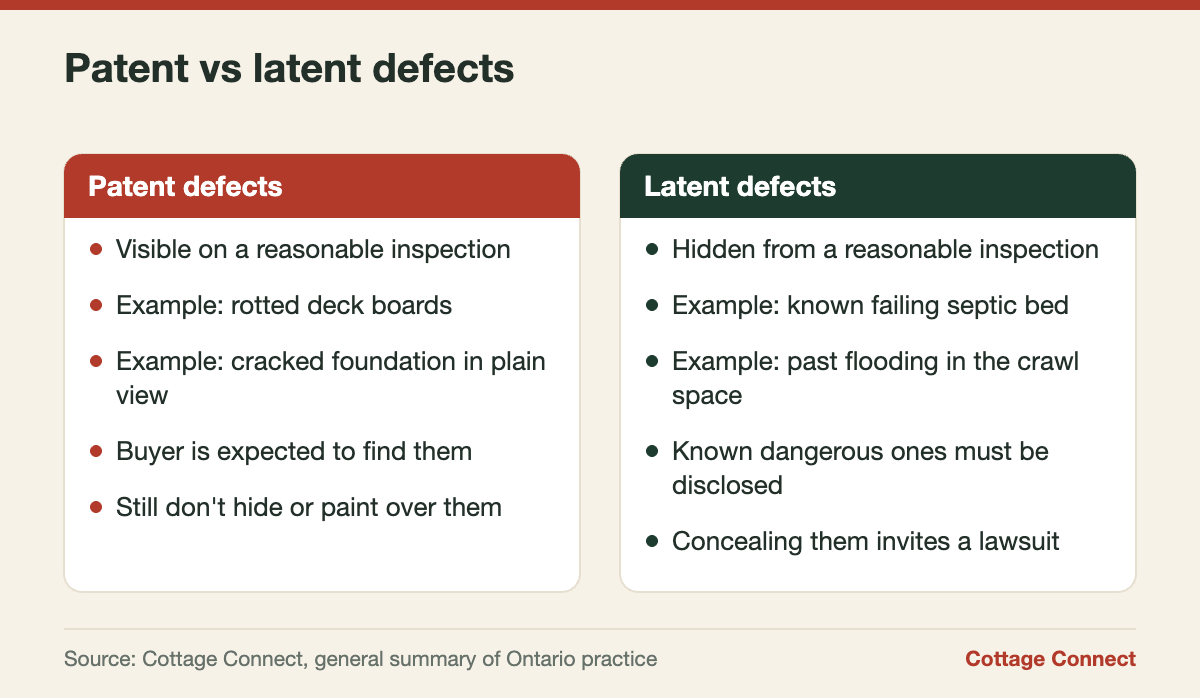
For resale property, Ontario generally applies the principle of buyer beware. Buyers are expected to inspect, and a seller usually isn’t liable for defects a reasonable inspection would reveal, called patent defects. That’s why inspection conditions are so common on cottage offers.
The protection has limits. A seller who actively conceals a problem (paints over water stains, covers a soggy septic bed with fresh sod) or answers a question falsely can be liable for misrepresentation. Ontario courts have also expected sellers to disclose known latent defects, the hidden kind, that make a property dangerous or unfit for habitation. Your listing agent has disclosure obligations of their own and can’t help hide a known material problem.
Once an agreement is firm, there’s no cooling-off period on a resale property. Disputes that start after closing usually end up with lawyers, so it’s far cheaper to deal with them before the offer.
The cottage issues buyers will ask about
| Issue | What to gather | Why it matters |
|---|---|---|
| Septic system | Permit, installation date, pump-out receipts, any municipal inspection results or orders | Replacement can cost tens of thousands and some townships now inspect on a cycle |
| Well and water | Well record, recent bacteria tests, treatment equipment and service history | Lenders and buyers want drinkable water confirmed |
| Shoreline and docks | Survey, dock and boathouse permits, any shore road allowance purchase | Structures may sit on land you don’t own |
| Access | Right-of-way documents, road agreements, association details, winter maintenance | Access affects financing, insurance and value |
| Buildings | Permits for additions, bunkies, decks and boathouses | Unpermitted work can mean orders or removal |
| Rentals | Short-term rental licence, occupancy limits, booking history | Licences and rules may not carry over to a new owner |
Septic: the most common source of cottage disputes
If you know the septic system is failing, has been backing up, or has more bedrooms connected than it was approved for, that belongs in the conversation. Townships are looking more closely. In Muskoka Lakes, high-risk systems (waterfront, over 30 years old, no permit on file, or used for short-term rentals) face a more invasive inspection. Georgian Bay Township’s 2024 re-inspection report recorded 31 enforcement letters and 3 orders.
Bedroom counts matter too. The Municipality of Dysart et al’s septic review information for short-term rentals says a property must comply with its approved bedroom count, and a first-time issue can be resolved by converting a bedroom to another use. If your listing advertises four bedrooms on a system approved for three, expect questions.
A pre-listing septic inspection, done while the ground is bare, is the cleanest way to deal with this. We cover timing in selling a cottage in the fall or spring.
Shoreline structures and the shore road allowance
Many cottage lots are separated from the water by an original shore road allowance, often 66 feet wide, which usually belongs to the municipality or the Crown. According to Hastings Highlands’ explanation of shore road allowances, docks, decks or boathouses built on it may be encroachments, and buying the allowance involves a municipal application, neighbour consent and fees.
If your dock or deck sits on an allowance you haven’t bought, say so. Buyers’ lawyers often find it anyway, and late surprises can kill a deal. Our post on what a shore road allowance is explains the options.
Access, roads and rights of way
Buyers need to know how they’ll get to the cottage, legally and in every season. Disclose whether the road is public or private, who maintains it, whether there’s a written right of way over a neighbour’s land, any road association fees, and whether the road is plowed. A seasonal road can affect the buyer’s mortgage options, so it’s better to be clear up front.
The SPIS: optional, but accurate if used
The Seller Property Information Statement is a standard questionnaire, with a schedule for waterfront and rural properties, that some listing brokerages ask sellers to complete. It isn’t required by law, and some lawyers advise sellers not to fill it out. If you do, every answer becomes something a buyer can rely on, so answer only what you know, say “unknown” where that’s true, and attach documents rather than guessing.
How to prepare a disclosure package
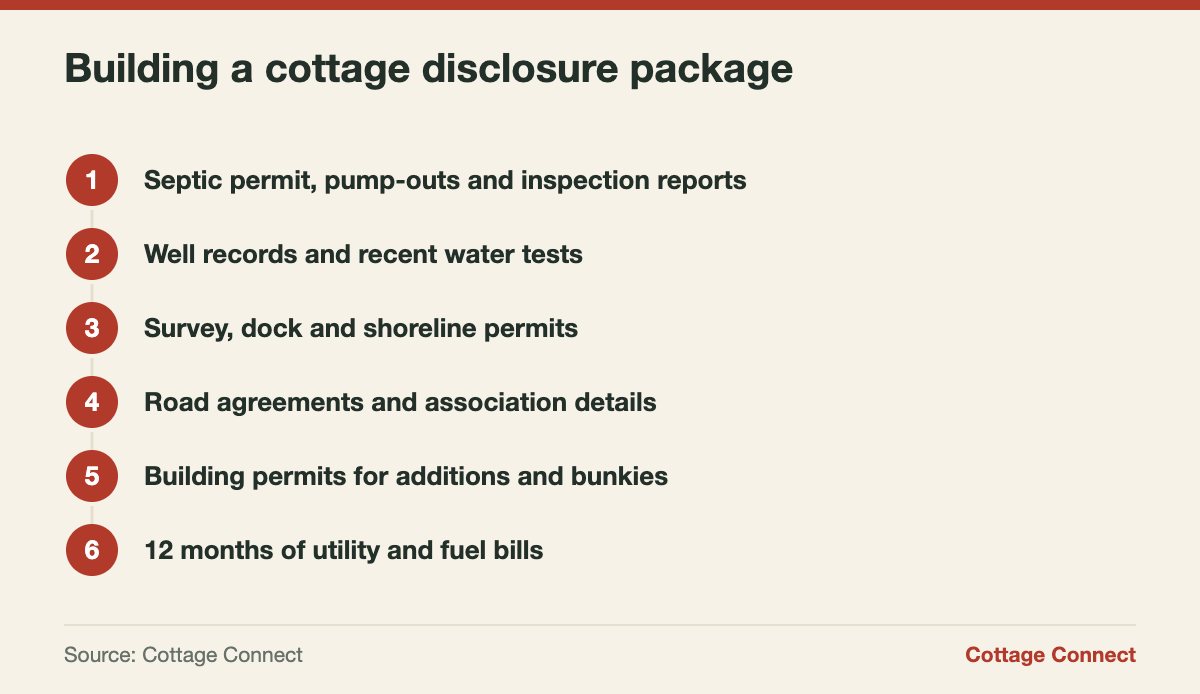
- Collect the septic permit, pump-out receipts and any inspection reports or municipal letters.
- Find the well record and order a fresh bacteria test while the water is still on.
- Pull your survey and any dock, boathouse or shoreline permits.
- Assemble access documents: rights of way, road agreements and association statements.
- List every building and addition, with permits where they exist.
- Gather 12 months of hydro, heating and internet bills.
- Review it all with your lawyer and listing agent before you decide what to put in writing.
Tip: If you know about a problem, get a quote to fix it before you list. A buyer who reads “septic bed flagged by township, replacement quote attached” negotiates from a known number. A buyer who discovers the same problem during their inspection tends to assume the worst and ask for more.
Frequently asked questions
Do I have to disclose a septic problem when selling a cottage?
If you know the system is failing or has been flagged by the township, you should expect to disclose it. A hidden septic failure can make a cottage unfit to use, and concealing one exposes you to a claim after closing. Get legal advice on the wording, and consider attaching an inspection report or repair quote.
Is the Seller Property Information Statement mandatory in Ontario?
No. The SPIS is an optional form, and some lawyers advise sellers not to complete it because buyers can rely on every answer. If you do fill it out, answer accurately, use “unknown” where you genuinely don’t know, and attach records such as permits and test results instead of estimating from memory.
What happens if a seller doesn’t disclose a known defect?
The buyer may sue for misrepresentation or for failing to disclose a known latent defect, and claims can arrive long after closing. Outcomes depend on what the seller knew, what was said and what an inspection could have found. Disclosing known issues in writing, with documents, is the simplest way to avoid that risk.
Does a short-term rental licence transfer to the buyer?
Don’t assume it does. Licensing rules differ by township, and some tie licences, occupancy limits or septic approvals to the owner or require a new application. Tell buyers what licence you hold and point them to the township. Our overview of short-term rental rules in cottage country is a starting point.
Getting ready to list?
Start with a realistic number from our cottage value estimate, read the cottage seller’s guide, and plan for the tax side with capital gains on a cottage.
This article is general information as of October 2026, not legal, tax, mortgage or financial advice. Rules and numbers change, so confirm the details for your situation with a licensed professional.