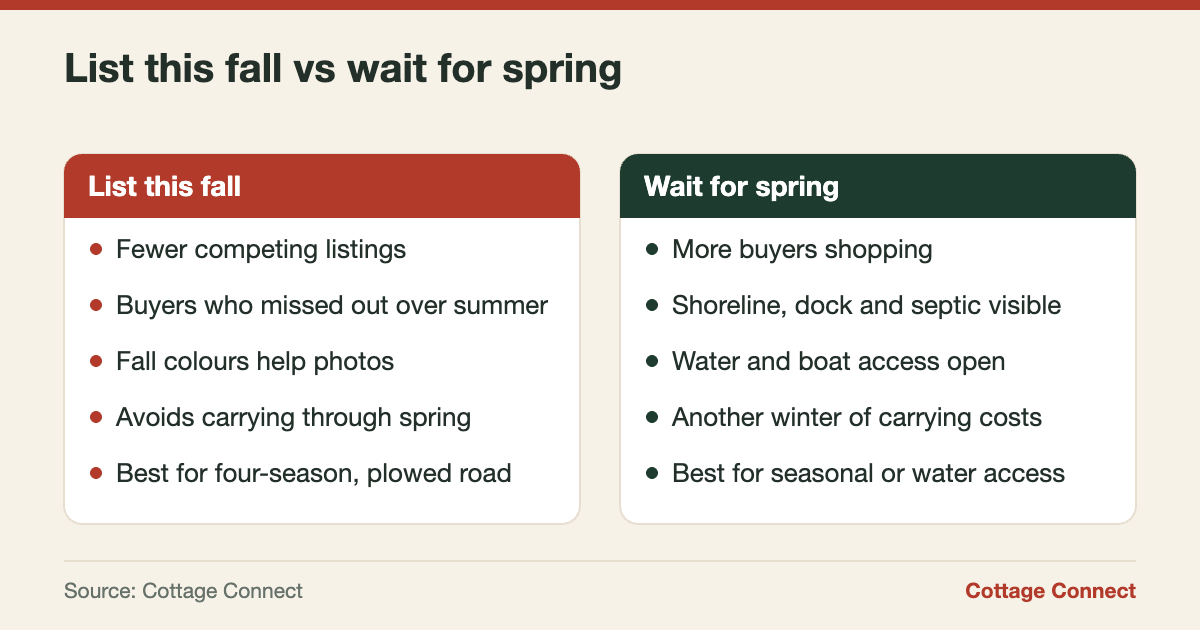
Selling a cottage in the fall makes sense when the cottage works in winter: four-season construction, permanent heat and a road that’s plowed. Those properties face fewer competing listings and can attract buyers who missed out over the summer. A seasonal or water-access cottage usually shows better in spring, when buyers can see the shoreline and get to it easily, but waiting means another winter of carrying costs and price uncertainty.
Key takeaways
- Four-season cottages on maintained roads are the best candidates for a fall or winter sale.
- Seasonal, water-access and seasonal-road cottages are harder to show and finance until spring.
- In 2026, most Ontario cottage markets are balanced or favour buyers, so price and presentation matter more than timing.
- Do the septic inspection and water test before freeze-up, whichever season you list in.
- Summer photos and a complete records package help a buyer commit to a cottage they can’t fully see.
What the 2026 cottage market means for timing
This isn’t a year where any listing sells in a weekend. RE/MAX’s 2026 Recreational Property Report rated Haliburton and Orillia as buyer’s markets and Muskoka, the Kawarthas and Peterborough as balanced. Royal LePage’s 2026 recreational report found that 66% of its Ontario agents were seeing longer selling times.
In a slower market, the season matters less than getting the price and presentation right. A well-priced four-season cottage can sell in November. An overpriced one can sit through July. Our summary of Ontario cottage prices by region shows where each area stands.
The case for selling a cottage in the fall
- Less competition. Many owners pull their listings after Thanksgiving, so a cottage still on the market gets more attention from the buyers who are left.
- Buyers who missed summer. Some buyers lost out on cottages in spring and summer and want to be ready for next season.
- Fall colours. Early to mid-October is one of the best times of year to photograph cottage country.
- A spring closing. A fall sale with a spring closing gives the buyer time to inspect, and saves you from opening up for another season.
- No second winter. If the cottage sells, you avoid insuring, heating, plowing and checking on a property you no longer use.
The case for waiting until spring
- More buyers. Spring is when most families start shopping for the coming summer.
- Everything is visible. The shoreline, dock, water depth, septic bed and roof can all be inspected. As we explain in buying a cottage in fall or winter, buyers write cautious offers when they can’t see those items.
- Access. Some roads aren’t maintained in winter. In The Archipelago on Georgian Bay, for example, certain roads aren’t maintained from October 15 to May 15, and private plowing of them isn’t allowed. Water-access cottages may not be reachable safely at all during freeze-up.
- Financing. A seasonal cottage generally needs a bigger down payment. Under Sagen’s program, a seasonal Type B property is limited to 90% financing, which narrows the buyer pool in any season.
Which cottages sell well in the off-season?
Off-season buyers tend to be serious, but they’re looking for a cottage they can use now. The strongest fall and winter listings share a few traits:
- Insulated, with a furnace or other permanent heat source rather than only a wood stove.
- Year-round municipal road, or a private road with a written plowing arrangement.
- Drinkable water that’s running, with recent test results.
- Close to a town, ski hill or snowmobile trails, so winter use is realistic.
Seasonal three-season cottages can still sell in fall, especially at a sharp price, but expect offers with longer conditions, requests for a spring inspection, or a holdback. If you’re not sure where yours fits, our guide to seasonal vs four-season cottages explains what buyers and lenders look for.
The cost of waiting another winter
Holding until spring isn’t free. Add up the next six months of property tax, insurance, hydro, heating or propane, internet, plowing or road fees and any caretaker visits. If there’s a mortgage or line of credit on the cottage, add the interest too.
Insurance deserves a call. The Insurance Bureau of Canada notes that insurers often expect owners to inspect, maintain and winterize a seasonal property when it isn’t in use, and that coverage can be more limited if a property is left unoccupied for long periods. If you’re no longer visiting because you’re selling, ask your broker what that means for your policy.
Price is the other unknown. RE/MAX’s year-end outlooks range from up 3% in Muskoka to down 3% in Haliburton. Nobody can promise spring will bring a better number, and the Bank of Canada’s decisions on October 28 and December 9 could move buyer budgets either way.
How to prepare a cottage for a fall listing
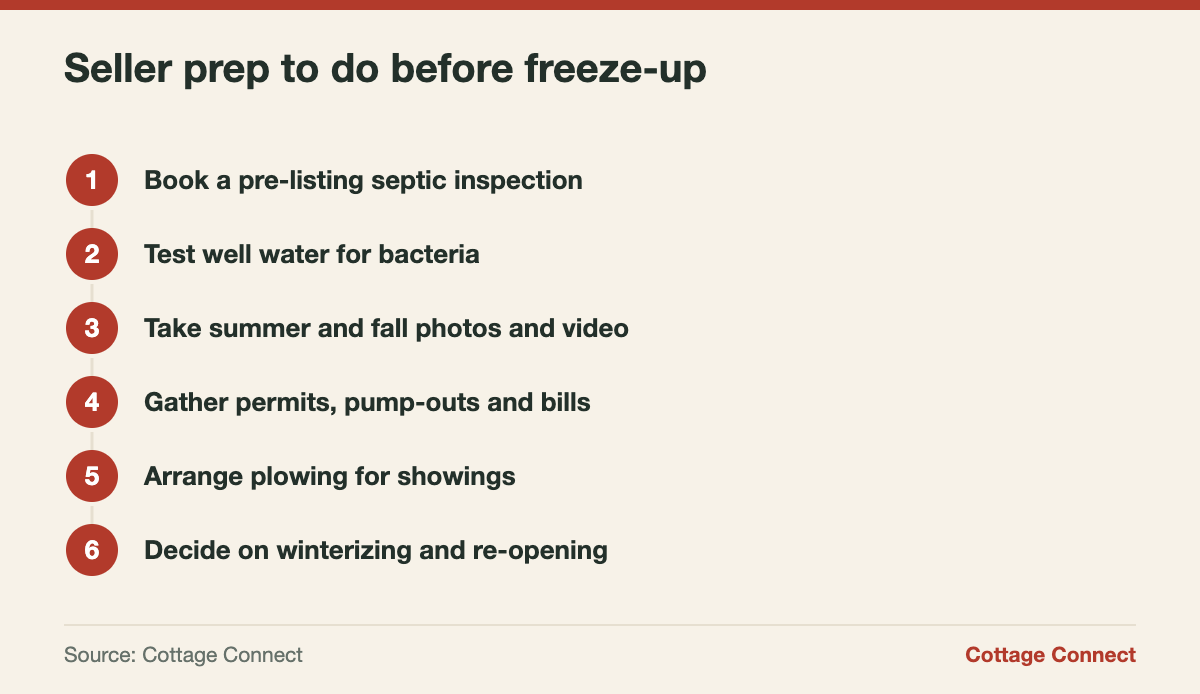
Whichever season you choose, some of the preparation has to happen before the ground freezes. Do these in October:
- Pre-listing septic inspection. A clean report from an inspector, done while the bed is visible, answers the biggest buyer question in advance.
- Water test. Submit a well-water bacteria sample before you drain the lines. In Ontario, the bacteria test for a private well is free through your local health unit.
- Photos and video. Capture the waterfront, dock and views now. Snow-covered listings sell better with summer photos alongside.
- Records package. Septic permit and pump-outs, well records, dock and shoreline permits, a survey, 12 months of hydro and heating bills, and road association details.
- Access plan. Arrange plowing for the driveway and a clear path to the door, or tell buyers plainly if the cottage is only reachable in certain months.
- Winterizing plan. Decide whether you’ll keep the heat and water on for showings or close up as usual. Our post on closing the cottage for winter covers what’s involved.
Tip: If you close up the cottage for winter, offer buyers a paid re-opening visit as part of the conditional period: you turn the water on, they test it and run the fixtures, and you re-winterize afterwards. It costs a few hours of a plumber’s time and removes one of the biggest reasons buyers hesitate in the off-season.
Frequently asked questions
What is the best time of year to sell a cottage in Ontario?
Spring and early summer usually bring the most buyers, because families want a cottage for the coming season. Fall can work well for four-season cottages on maintained roads, with less competition and serious buyers. Seasonal and water-access cottages generally do best when buyers can see and reach the shoreline.
Can you sell a cottage in the winter?
Yes, especially a winterized one on a plowed road. Buyers will still want to inspect the septic, well and dock, so expect longer conditions or a spring holdback. Summer photos, recent water tests and a full set of records make winter offers stronger and help avoid surprises late in the deal.
Should I winterize the cottage before listing it?
If the cottage is seasonal, yes: frozen pipes would hurt the sale far more than a closed cottage. Before you drain it, do the septic inspection and water test, and offer buyers a re-opening visit during their conditional period. A four-season cottage can stay heated with the water on.
Thinking about selling?
Get a realistic number first with our cottage value estimate, check recent sold prices, and read the cottage seller’s guide before you choose your listing date.
This article is general information as of October 2026, not legal, tax, mortgage or financial advice. Rules and numbers change, so confirm the details for your situation with a licensed professional.