A septic re-inspection program is a township’s way of checking existing private septic systems on a regular cycle, not just when they’re installed. In 2026, Muskoka Lakes, Algonquin Highlands and Minden Hills are all inspecting cottage systems, and fees range from nothing for a visual check to $340 or more for a detailed inspection. A failing system gets a deadline to fix it, and a full replacement can run into the tens of thousands of dollars.
Key takeaways
- Septic systems under 10,000 litres a day fall under the Ontario Building Code, even at seasonal cottages.
- Muskoka Lakes targets waterfront systems by age and risk; Phase I checks are free and Phase II costs $340 or $355.
- Algonquin Highlands started a new program in 2026, with free initial inspections about every five years.
- Owners usually have to uncover the tank lids; an unprepared system can mean a second visit and a fee.
- One Ontario manufacturer’s 2026 estimate puts a full conventional replacement at $28,700 to $50,500.
Why townships are inspecting cottage septic systems
Private systems serving a single lot under 10,000 litres a day are regulated under Part 8 of the Ontario Building Code, administered by municipalities or health units. The Town of Huntsville notes that a system must meet the code even if the cottage is only used seasonally, and must be designed for the maximum possible use.
The reason for re-inspection is simple: most cottage systems sit near the water, and a failing one can affect the lake. Some inspections are mandatory under source protection plans for drinking water intakes. Others are discretionary programs that townships choose to run.
Septic re-inspection programs running in 2026
| Municipality | What’s happening | Owner cost |
|---|---|---|
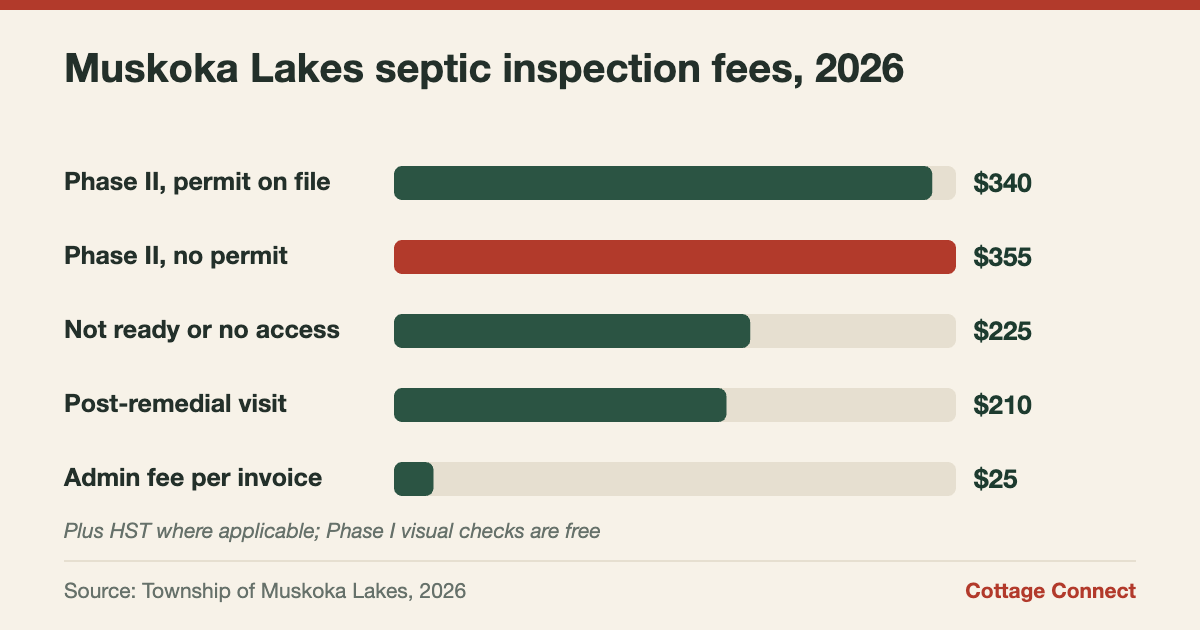
| Muskoka Lakes | Risk-based program across 5 zones, generally May to October; high-risk includes waterfront systems over 30 years old, no permit on file, or short-term rentals | Phase I free; Phase II $340 (permit on file) or $355 (no permit), plus HST and a $25 admin fee |
| Algonquin Highlands | New maintenance inspection program from June 1 to October 31, 2026, repeating about every 5 years; short-term rentals included | Initial inspection free; $150 re-inspection fee if the system isn’t prepared |
| Minden Hills | Re-inspection program in zones D1 and D2 from May to October 2026, with a questionnaire mailed first | Not stated in the township’s announcement |
| Huntsville | Maintenance inspection program starting with high-risk systems, aiming to inspect each at least once every 20 years | Third-party report needed where records are missing on systems over 25 years old |
Muskoka Lakes also charges $225 if the system isn’t ready or can’t be accessed, and $210 for a post-remedial inspection after repairs. Details come from each township’s own pages: Muskoka Lakes, Algonquin Highlands and Huntsville. If your cottage is elsewhere, ask your township or health unit whether a program covers your property.
What a septic inspection actually checks
Inspections range from a quick look to a full assessment. In Muskoka Lakes, a Phase I check takes 10 to 15 minutes and involves no digging. A Phase II inspection opens the tanks, pump chambers and distribution boxes and may include flow tests or soil sampling.
Algonquin Highlands lists what its inspectors look for: cracked lids, spalling concrete in the tank, damaged baffles, ponding, odour, erosion, water flowing toward the system, and unusually green or thick grass over the bed.
Results from one township
Georgian Bay Township’s 2024 year-end report gives a sense of outcomes. Its discretionary program found issues at 27 of 334 inspections, about 8%, and the township issued 31 enforcement letters and 3 orders that year. Residents weren’t charged for the program.
How to prepare for the inspection
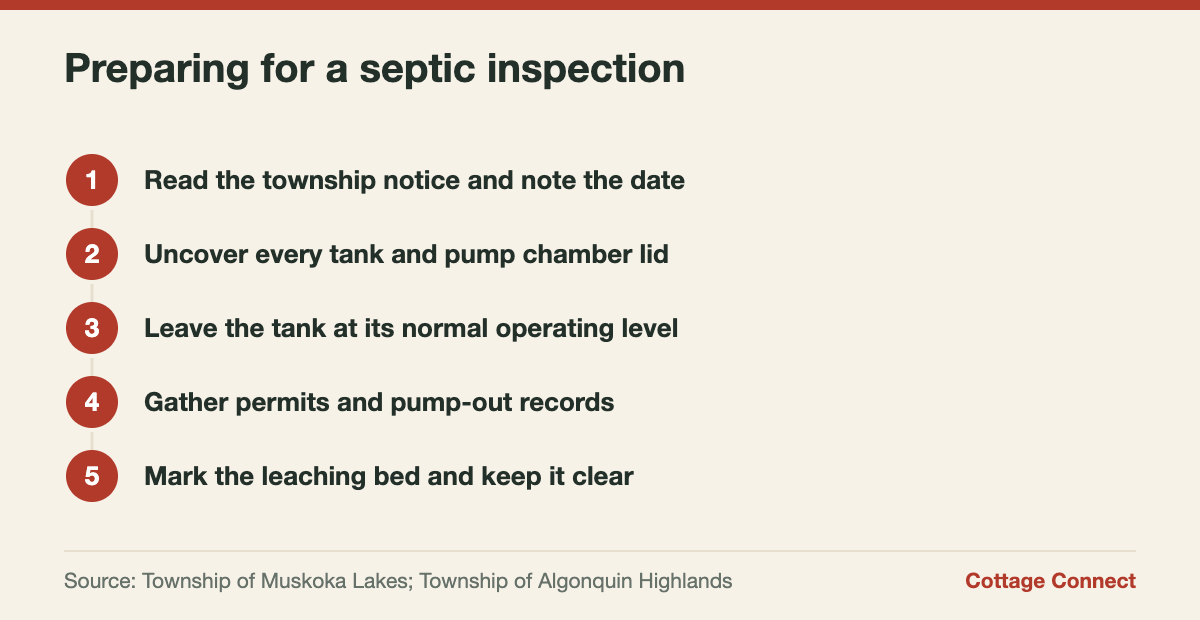
- Read the township’s notice and confirm the date, or arrange your own qualified inspector by the deadline if the program allows it. Muskoka Lakes required notice by April 1, 2026.
- Uncover every lid: both septic tank compartments, pump tanks and distribution boxes.
- Leave the tank at its normal operating level. Pumping isn’t required; if you do pump in Muskoka Lakes, do it at least six weeks ahead.
- Gather the permit, pump-out receipts and service reports for any treatment unit.
- Keep vehicles off the bed and mark where it is.
What happens if your septic fails
In Huntsville, an owner whose system fails receives a letter listing the deficiencies and a deadline to fix them, with further action if the work isn’t done. Other townships follow a similar path from letters to formal orders. The fix may be a repair, such as a new baffle or lid, or a full replacement that needs a permit, a designer and a licensed installer.
What septic replacement costs in Ontario
There’s no official price list. One Ontario septic manufacturer’s estimate, updated in April 2026, put a full conventional system project at $28,700 to $50,500 and an advanced or tertiary system at $32,700 to $67,500, with permits accounting for $1,000 to $3,000. Waterfront lots with shallow soil, rock or tight setbacks often need the more expensive designs.
Grants are rare. South Nation Conservation’s clean water program in Eastern Ontario, for example, covers 50% of eligible costs up to $3,000 for faulty systems with a demonstrated water quality impact, but excludes replacements tied to house sales. Muskoka Lakes notes that systems may last about 20 years, so plan for replacement rather than hoping to avoid it. Our annual cottage cost budget includes a septic reserve for that reason.
Buying or selling a cottage with an older system
For buyers, an older or unpermitted system on a waterfront lot is now more likely to be inspected soon after you close. Ask for the permit, the installation year and any township letters, and make the offer conditional on a septic inspection. Our guide to septic systems, wells and water and our post on buying in fall or winter cover timing.
For sellers, a township letter or order belongs in your disclosure, and so does a bedroom count that exceeds what the system was approved for. See what to disclose when selling a cottage.
Tip: If you’re shopping on a specific lake, ask the township which inspection zone it’s in and when that zone is scheduled. A cottage due for a Phase II inspection next summer is worth inspecting thoroughly now, because any order will land on the new owner.
Frequently asked questions
How much does it cost to replace a septic system in Ontario?
Costs depend on soil, slope, access and system type. One Ontario manufacturer’s 2026 estimate puts a full conventional project at $28,700 to $50,500 and an advanced treatment system at $32,700 to $67,500, including permits of $1,000 to $3,000. Get quotes from licensed installers for your specific lot.
How often should a cottage septic tank be pumped?
The Town of Huntsville recommends at least every five years for a typical household. Muskoka Lakes suggests pumping when sludge and scum fill one-third of the tank and adjusting for how heavily the cottage is used. A busy rental or a large family may need more frequent pump-outs than a lightly used cottage.
Can I use my own inspector instead of the township’s?
Often, yes. Muskoka Lakes allows a qualified third-party inspector if you notify the township by its deadline and file the report and certificate on time. Algonquin Highlands accepts certificates on ministry-approved forms. Check your township’s rules, including who qualifies and what late fees apply.
Looking at waterfront?
Browse cottages in regions with active programs, such as Muskoka and Haliburton, and ask for septic records before you book a second showing.
This article is general information as of October 2026, not legal, tax, mortgage or financial advice. Rules and numbers change, so confirm the details for your situation with a licensed professional.