Buying a cottage on the Trent-Severn Waterway is different from buying on most Ontario lakes because Parks Canada manages the bed and waters. Any dock, boathouse, swim raft or shoreline work, including repairs and seasonal docks, needs a Parks Canada permit; docks are limited to 32 feet in most cases; and existing structures aren’t grandfathered. In return, you get lakes connected by locks and some of the best-value waterfront within reach of the GTA.
Key takeaways
- Parks Canada requires a permit for any work on, under or over the waterway’s bed and waters.
- Seasonal and temporary docks need permits too, and no in-water structures are grandfathered.
- The maximum dock length is 32 feet; road-access lots may have one dock and water-access lots two.
- Treated wood can’t touch the water, and removing emergent plants like cattails isn’t permitted.
- Ask for permits for every existing structure before you firm up an offer.
Who controls the water on the Trent-Severn?
The Trent-Severn Waterway is a national historic site operated by Parks Canada, running between Lake Ontario and Georgian Bay through the Kawarthas and other lakes and rivers. Many of the Kawartha lakes buyers know best, including Balsam Lake, Sturgeon Lake, Pigeon Lake, Stoney Lake and Rice Lake, are part of the system.
On these lakes, Parks Canada regulates what happens in the water, while your township and conservation authority regulate what happens on land, and each may need its own approval. If you’re not sure whether a particular bay or river section is part of the waterway, ask Parks Canada before you assume.
What needs a Parks Canada permit
According to Parks Canada’s in-water and shoreline works permit page, a permit is needed to install, repair, replace, relocate or remove temporary, seasonal or permanent structures, including:
- Docks, boathouses, boatports and swim rafts
- Boat lifts, launch ramps and marine railways
- Dock abutments and inland wet slips
- Shoreline stabilization, such as retaining walls or armour stone
- Dredging and removing submerged aquatic vegetation
A dry upland boathouse above the high water mark doesn’t need a Parks Canada permit, although any dock or railway connected to it does. Removing emergent vegetation, such as cattails or bulrushes, isn’t permitted at all. Landowners are also responsible for removing trees that fall from their property into the waterway.
The rules that shape the waterfront
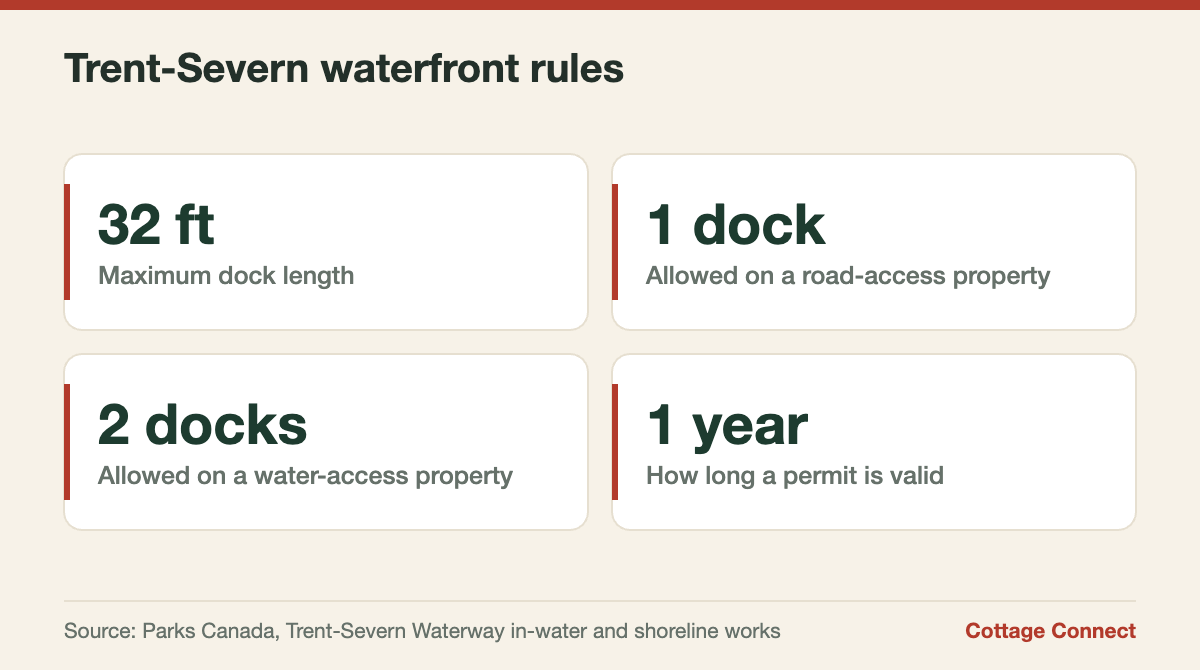
- Dock length. The maximum is 32 feet, with extensions possible for site conditions.
- Number of docks. One for a road-access property, two for a water-access-only property.
- Materials. Treated wood can’t be in contact with the water, and creosote or creosote-treated wood isn’t approved.
- No grandfathering. If an existing structure is removed, any replacement has to meet current policy.
- Timing. Permits are valid for one year, work can be paused during fish spawning windows, and Parks Canada recommends applying several months ahead.
What it means when you buy
The no-grandfathering rule is the one that catches buyers. A 50-foot dock or a large crib dock may be fine to use as it stands, but if it fails and has to come out, the replacement may need to be shorter or built differently. That affects how you value the waterfront.
Ask the seller for the Parks Canada permit for every in-water structure, along with any municipal building permits. If there are no permits, factor in the risk, and talk to your lawyer about how to handle it in the agreement. Our broader guide to dock and boathouse permits in Ontario covers the township and provincial side, and our post on shore road allowances explains why a dock may start on land you don’t own.
Water levels and weeds
Water levels on the Trent-Severn are managed through its dams and locks, so they can change through the season and from year to year. A dock that’s comfortable in June may sit high and dry in a dry August, and spring levels can be higher than you’d expect from a summer visit.
Some shallow bays also grow thick weeds by midsummer. Because removing emergent plants isn’t permitted, and removing submerged vegetation needs a permit, you can’t simply clear the shoreline after you buy. Visit in July or August if you can, look at the water off the dock, and ask neighbours and the lake association what a typical summer looks like.
The upside: lock-to-lock boating and value
The reason people accept the rules is the boating. A cottage on the waterway can mean days spent travelling through locks to other lakes and towns, without trailering a boat. After this year’s price declines, the Kawartha lakes also offer more value than they did a year ago.
RE/MAX’s 2026 report put the Kawarthas’ first-quarter average at $625,137, down 14.0% from a year earlier, with sales up 4.0%. We compare the region with its neighbours in Muskoka vs Haliburton vs the Kawarthas, and the Kawartha Lakes market report has local detail.
Other checks for Trent-Severn buyers
- Foreign buyers. The City of Kawartha Lakes is a census agglomeration in Statistics Canada’s 2021 list, so non-Canadians may be covered by the federal ban there until January 1, 2027. See can Americans buy a cottage in Ontario.
- Septic and well. The usual cottage checks apply; waterfront systems close to the water deserve extra attention.
- Shoreline work on land. The province’s work permit rules and your conservation authority may apply to work above the water. Ontario’s shore land permit guidance notes that one agency’s permit doesn’t replace another’s.
Due diligence before you firm up
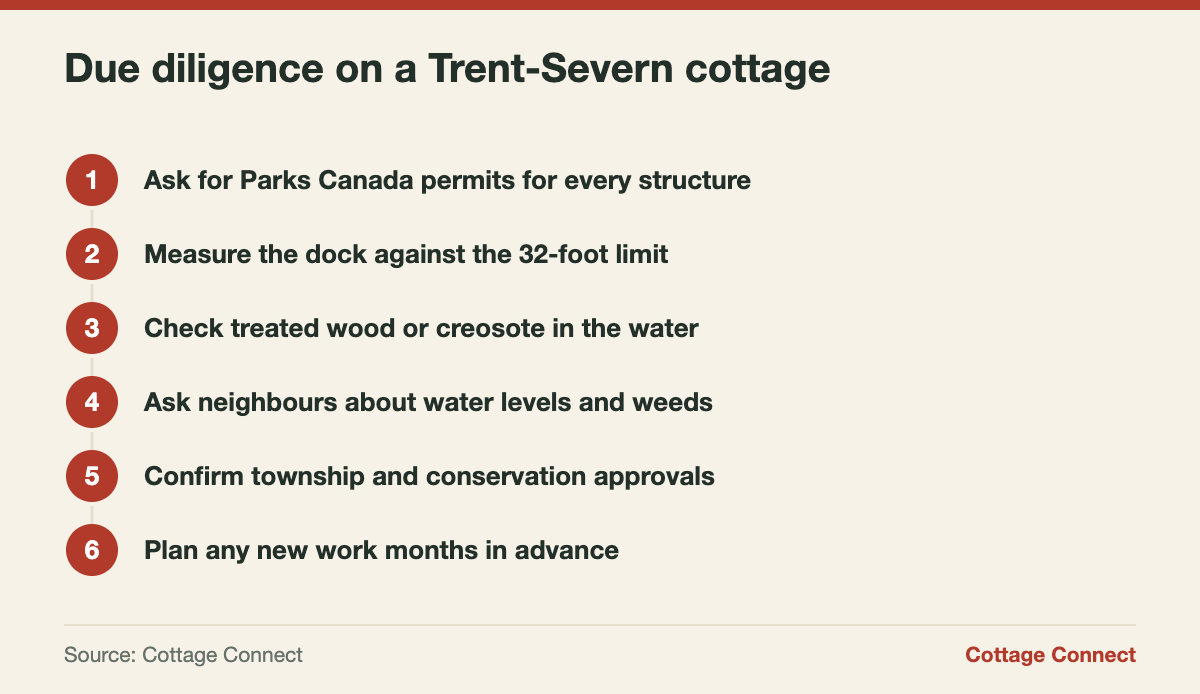
- Ask for Parks Canada permits for every dock, boathouse, lift and shoreline wall.
- Measure the dock and count the structures against current policy.
- Look for treated wood or creosote in contact with the water.
- Ask neighbours about water levels, spring flooding and late-summer weeds.
- Confirm township building permits and any conservation authority approvals.
- If you plan new work, apply months before the season you want to build in.
Tip: If you’re planning to replace or extend a dock after closing, call Parks Canada’s permitting office before you make your offer and describe the site. A quick conversation about what’s likely to be approved can tell you whether the waterfront you’re paying for is the waterfront you’ll be allowed to keep.
Frequently asked questions
Do I need a permit for a dock on the Trent-Severn Waterway?
Yes. Parks Canada requires a permit to install, repair, replace, relocate or remove any dock on the waterway, including seasonal and temporary docks. The maximum length is 32 feet, with possible extensions for site conditions. Your township may also require a building permit, so check both before any work starts.
Can I remove weeds in front of my cottage on the Trent-Severn?
Not freely. Removing emergent vegetation such as cattails or bulrushes isn’t permitted, and removing submerged aquatic vegetation requires a Parks Canada permit. If weeds matter to you, visit the property in mid to late summer before you buy, and ask neighbours how the shoreline looks in a typical year.
Are existing docks on the Trent-Severn grandfathered?
No. Parks Canada says no in-water structures are grandfathered. An existing dock can stay in use, but if it’s removed, any replacement has to meet current policy, including the 32-foot limit and material rules. Ask the seller for permits for every structure, and value the waterfront with that in mind.
Shopping on the waterway?
Browse cottages in the Kawartha Lakes and Peterborough and the Kawarthas, and ask for the Parks Canada permits on every listing you like.
This article is general information as of October 2026, not legal, tax, mortgage or financial advice. Rules and numbers change, so confirm the details for your situation with a licensed professional.